

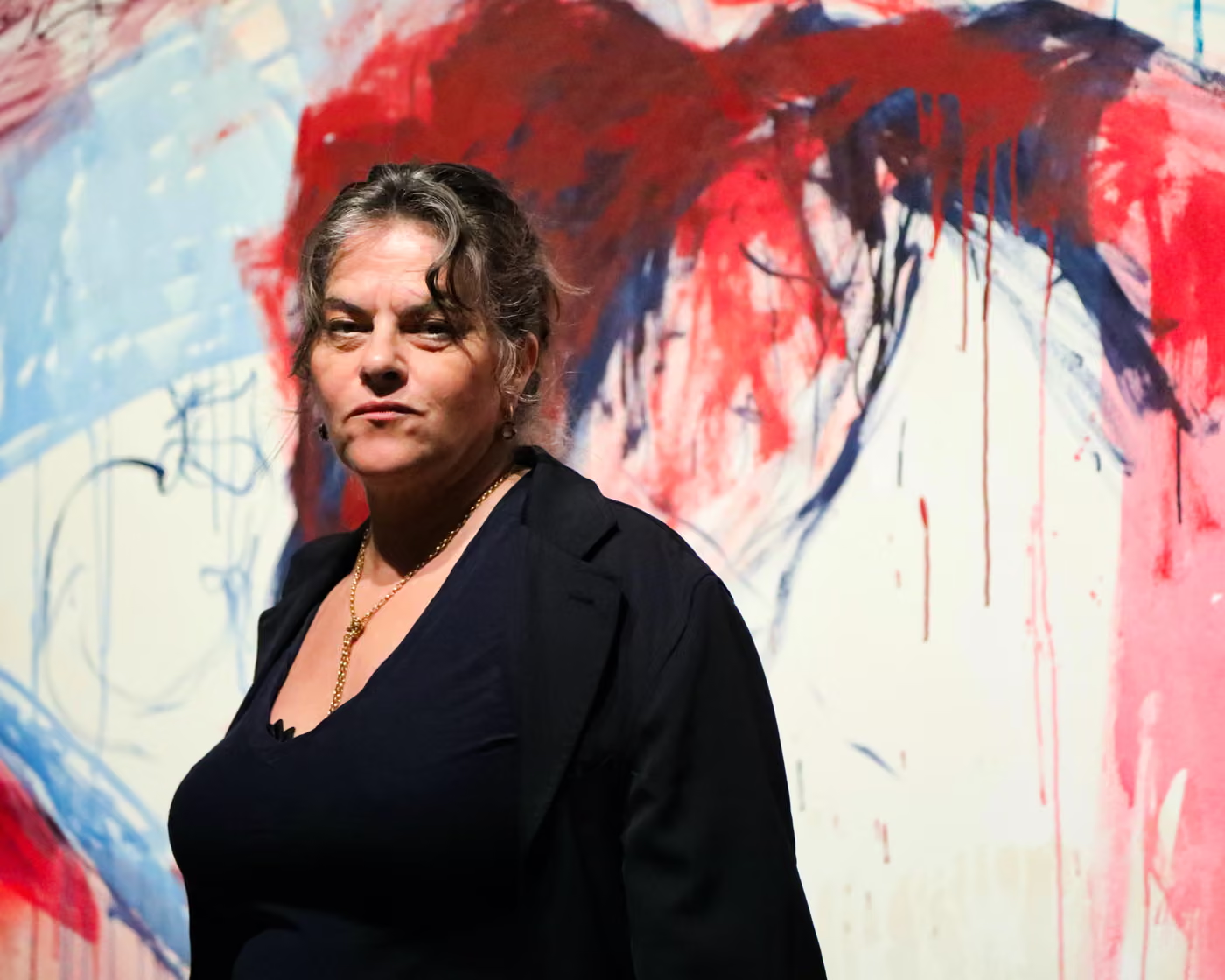
Tracey Emin with The End of Love, 2024, at Tate Modern.
Photograph: Alishia Abodunde/Getty Images.
.svg)
.svg)
Tracey Emin with The End of Love, 2024, at Tate Modern.
Photograph: Alishia Abodunde/Getty Images.
Tracey Emin with The End of Love, 2024, at Tate Modern.
Photograph: Alishia Abodunde/Getty Images.
Tracey Emin with The End of Love, 2024, at Tate Modern.
Photograph: Alishia Abodunde/Getty Images.
.svg)
ON TRACEY EMIN, AND HER SECOND LIFE
Currently on view at Tate Modern, Tracey Emin: A Second Life traces 40 years of the artist’s practice. Her body and lived experience being her primary source material, Emin’s life is here on display, with moments of joy next to moments of struggle – passion and pain rendered into art forms. While cementing the artist’s refusal to separate art and life, this major retrospective goes one step further by collapsing the boundary between the artist and the viewer. Across media and across time, a shared emotional landscape emerges, as our own emotions are put on display here, too.
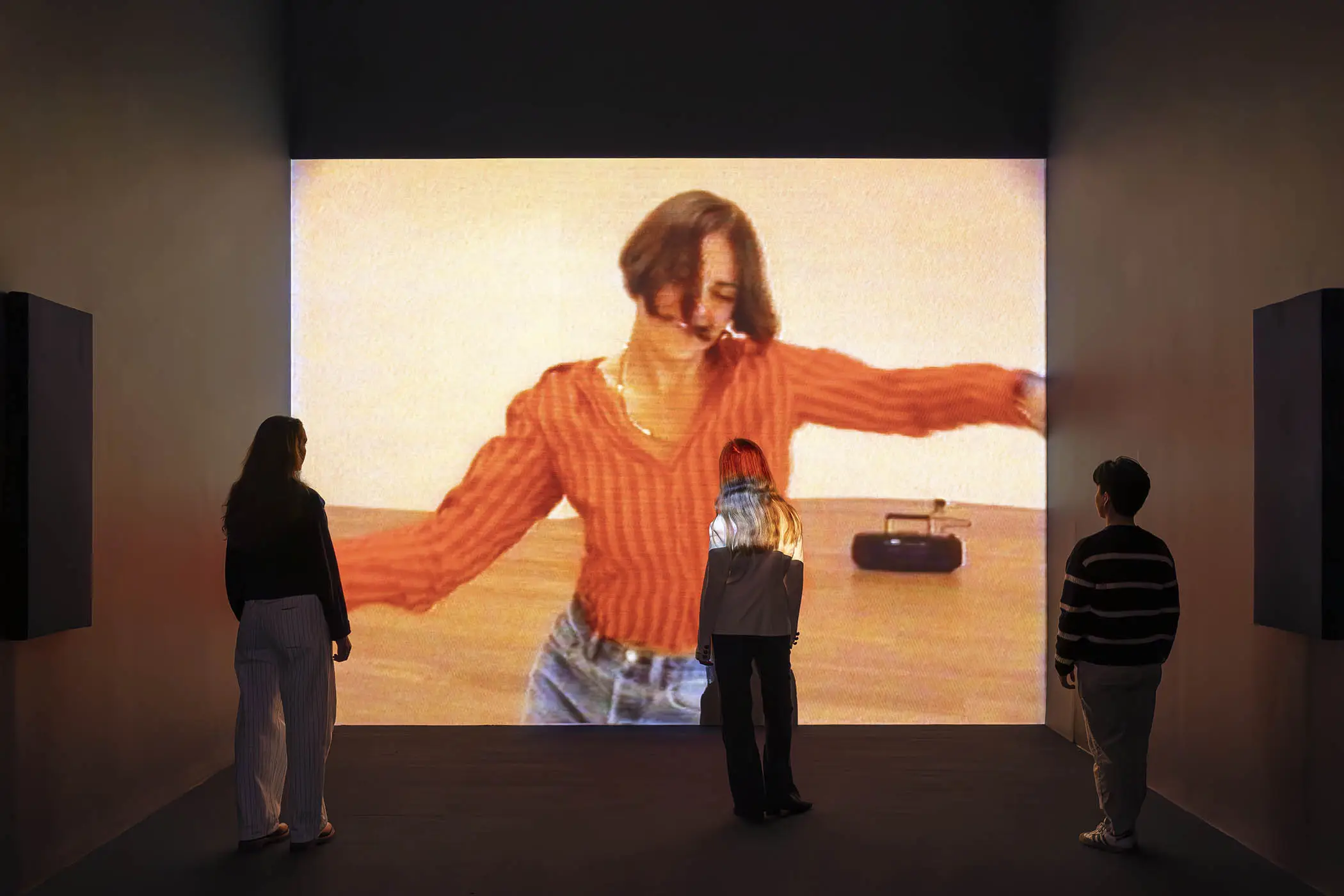
Why I Never Became a Dancer, 1995, installation view, Tracey Emin: A Second Life, Tate Modern.
© Tracey Emin/DACS 2026. Photograph © Tate (Yili Liu).
Why I Never Became a Dancer, 1995, installation view, Tracey Emin: A Second Life, Tate Modern.
© Tracey Emin/DACS 2026. Photograph © Tate (Yili Liu).
A Second Life encapsulates the personal nature of Emin’s work through its exhibition design. Instead of a white-walled, brightly lit display, the galleries are subdued and darkened, conjuring a womb-like atmosphere of heightened intimacy, at times edging on claustrophobia. Themes of loss of innocence, the objectification of the female body, and the resulting psychological turmoil take shape in early installations and video works. Among the latter is Why I Never Became a Dancer (1995), where a devastating contrast emerges between footage of the artist’s childhood in Margate and her voiceover narration recounting experiences of misogyny and sexual violence.
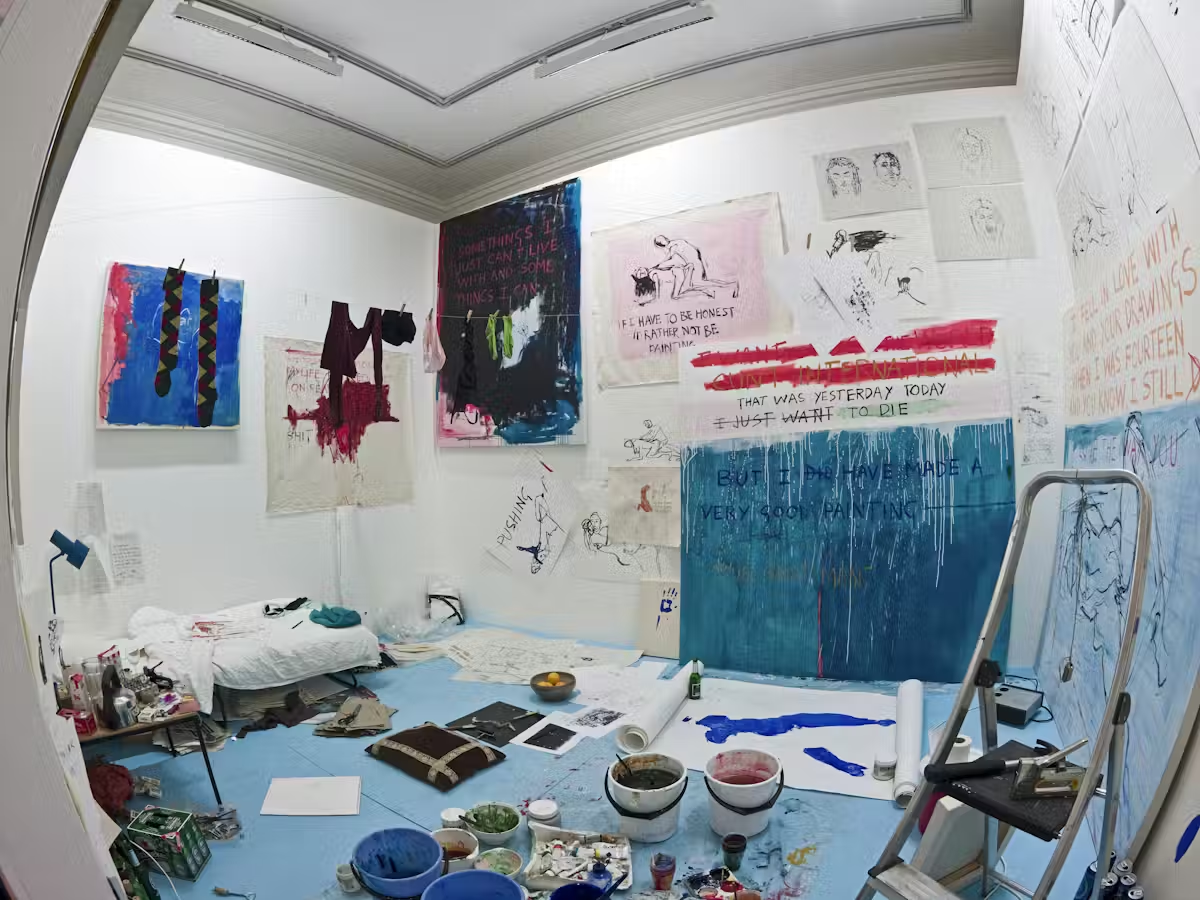
Exorcism of the Last Painting I Ever Made by Tracey Emin (1996).
© Tracey Emin/DACS 2026.
Exorcism of the Last Painting I Ever Made by Tracey Emin (1996).
© Tracey Emin/DACS 2026.
Throughout A Second Life, we are offered a glimpse into how Emin navigates her lived experiences, and by extension, her artistic practice. The exhibition opens with small photographs of her earliest works that she destroyed after her first abortion in 1990. Then, in Exorcism of the Last Painting I Ever Made (1996), we witness a re-staging of the performance in which she spent three weeks locked naked in a gallery in Stockholm. These works visualise the artist’s fraught relationship with painting, a medium she had abandoned during a challenging time in her life. A sense of coming full circle emerges as we follow Emin’s work through the years towards her return to the medium.
.webp)
Tracey Emin, installation view of Tracey Emin: A Second Life at Tate Modern, 2026.
Photograph © Tate (Jai Monaghan).
Tracey Emin, installation view of Tracey Emin: A Second Life at Tate Modern, 2026.
Photograph © Tate (Jai Monaghan).
Seen within the exhibition’s intimate atmosphere, the iconic status of My Bed (1998) – the work that first brought Emin widespread recognition and a nomination for the Turner Prize – gives way to an immediate emotional encounter. The artist’s own, unmade bed, covered in real objects, such as cigarettes, empty bottles, condoms, and underwear, renders her struggle with depression into a visual form. Despite the absence of a physical body, My Bed remains one of the rawest self-portraits in contemporary art: the real life of a real person laid bare, collapsing any lingering distinction between art and lived experience.
To be welcomed into someone’s inner world, especially when that someone is one of Britain's most famous artists, is a rare and special experience. But the invitation comes with its own challenges: when the artist succeeds in translating their pain into their work, we, the viewers, feel that pain too. It is extremely difficult to watch How it feels, Emin’s 1996 film about her abortion, but it is more difficult to look away. In one room, hospital wristbands are displayed alongside children’s shoes; in another, a painting depicts the artist carrying her mother’s ashes. Yet it is through such moments that art’s impact becomes most immediate: as we confront the artist’s emotions, we are made aware of our own.
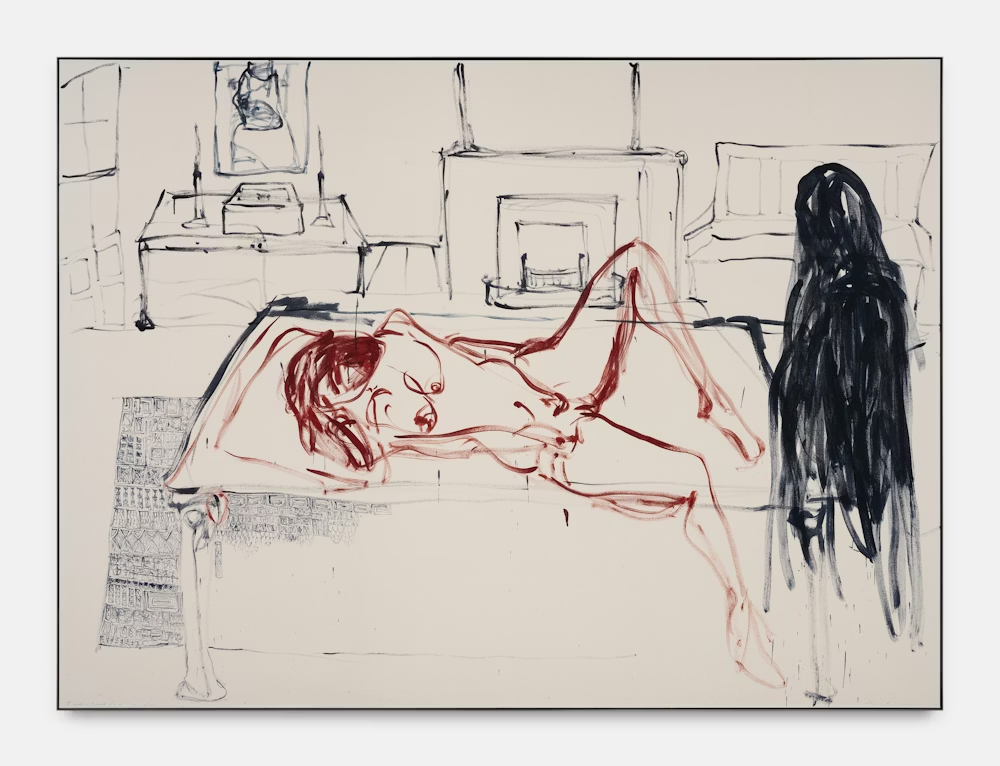
Tracey Emin, I watched Myself die and come alive, 2023.
Photograph © Tracey Emin.
Tracey Emin, I watched Myself die and come alive, 2023.
Photograph © Tracey Emin.
Emin’s most recent works address her battle with cancer, as she has now entered her second life. Never-before-seen photographs, including those of her stoma following the life-saving operation, reject the societal taboo surrounding illness and disability with a characteristically unflinching directness. As the exhibition concludes with a series of paintings, such as I watched Myself die and come alive (2023), accompanied by bronze sculptures, it affirms defiance in the face of trauma and strength in vulnerability. Viewed from the vantage point of 2026 as belonging to the artist’s first life, the packed suitcase in My Bed gains new meaning, appearing as a gesture towards recuperation, rather than escape.
Emin’s artistic expression has and continues to be striking in that it never tips over into sentimentality or melodramatic tragedy: here, life and its hardships are presented as they are, as the artist experienced them. While her art is often described as ‘confessional’, it is anything but – confession implies shame, and Emin’s work unequivocally asserts that there is no shame in being human. Despite the exhibition’s emotionally demanding subject matter, the takeaway is necessarily life-affirming, and this is where Emin’s triumph really shines. As much as A Second Life is about pain, it is ultimately about its transcendence, and is a testament to the beauty of being alive.
Tracey Emin: A Second Life is on view at Tate Modern, London, until 31 August 2026.


