

.svg)
.svg)
Jacqueline Gourevitch
Jacqueline Gourevitch (b. 1933) is a quietly radical figure in post-war American art, known for her ethereal, meditative paintings that hover between abstraction and observation. A painter of clouds, architecture, and perception itself, Gourevitch has spent decades crafting a visual language of stillness, luminosity, and intellectual rigour.
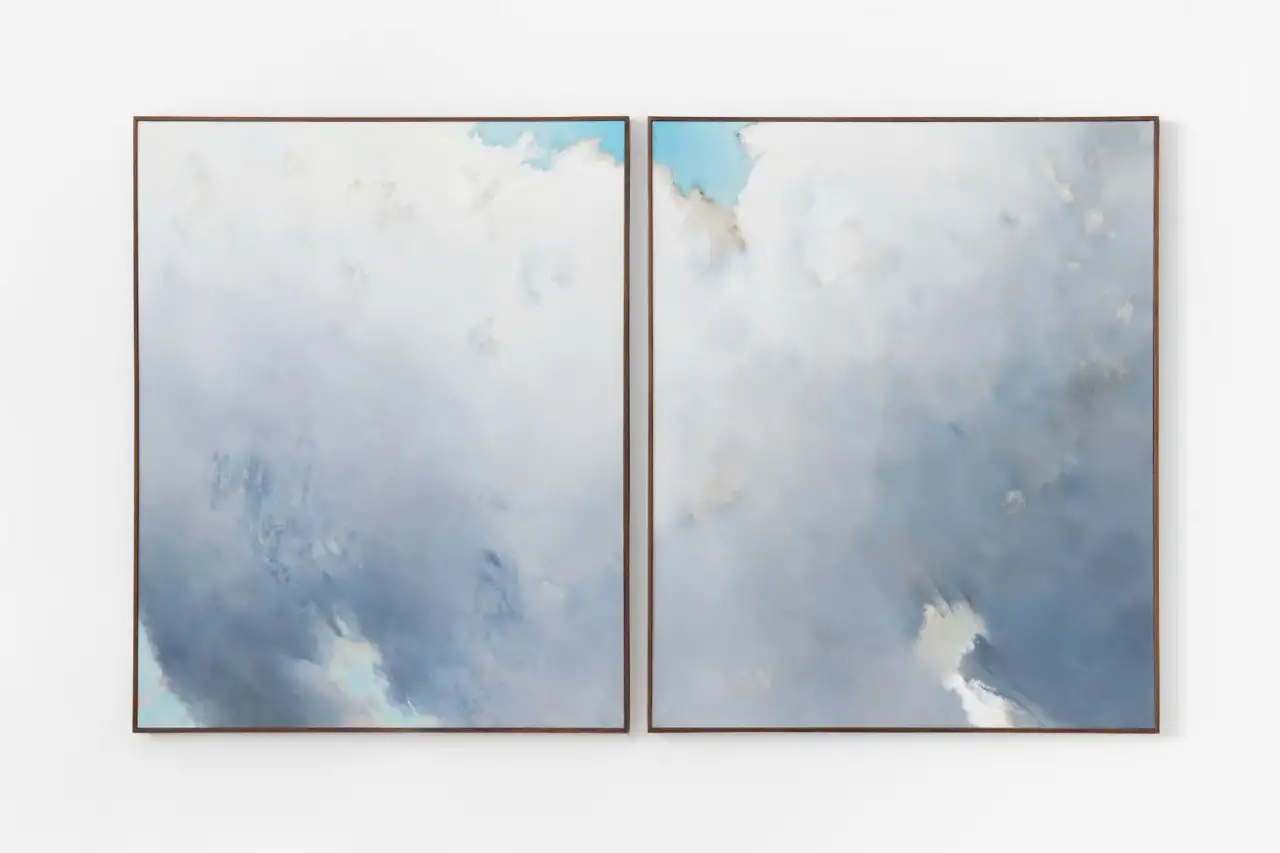
Emerging in the 1960s amid the dominance of Minimalism and Pop, Gourevitch followed neither trend. Instead, she cultivated her own path, often turning her gaze skyward. Her ‘Cloud Paintings’ – monumental yet weightless – transcend both landscape and representation, rendering the atmosphere as a site of philosophical enquiry and visual poetry. These works are less depictions than experiences: air made visible, thought given form.
Gourevitch’s approach is disciplined and analytical, yet never cold. Her early grid-based abstractions and aerial views of cities reflect obsessions she continues to explore in her later work. A teacher as well as a painter, she taught for many years at the Cooper Union and Wesleyan University, influencing generations of artists with her thoughtful, uncompromising practice.
Despite her low public profile, Gourevitch’s work has been quietly influential. Her work – championed by critics who recognise the deep intelligence and lyrical power of her vision – has been exhibited in major institutions, including the Whitney Museum of American Art, the Brooklyn Museum of Art, and ICA/Boston, and is held in major collections, including MoMA. Gourevitch paints not just what she sees, but how we come to see.
Jacqueline Gourevitch’s art is an invitation to slow down, to look up, and to consider the vast, shifting architecture of the world... and the mind that beholds it.
.svg)


